

If you’re reading this, chances are you’ve walked past a bakery, a dairy plant, or a frozen food aisle without ever thinking about the tiny, hardworking parts that keep those operations running smoothly. I’m a thrust roller bearing supplier, and let me tell you—these things aren’t just for big industrial machinery in factories you can’t walk through. They’re the unsung heroes of food processing, handling forces you wouldn’t believe in environments you’d never expect to find precision bearings.
Wait, first—let’s get on the same page. Thrust roller bearings aren’t the same as the ball bearings on your bike wheel, right? They’re designed specifically to handle axial loads, the kind that push straight down or up, not side-to-side. Think of it like pressing a book straight into a table, not sliding it across. For food processing, that exact design is non-negotiable because almost every step involves pushing, pressing, or stacking heavy loads. Some people mix them up with radial bearings, but trust me—when you’re running a 24/7 line turning butter into ghee or pressing apples into cider, you need the right tool.
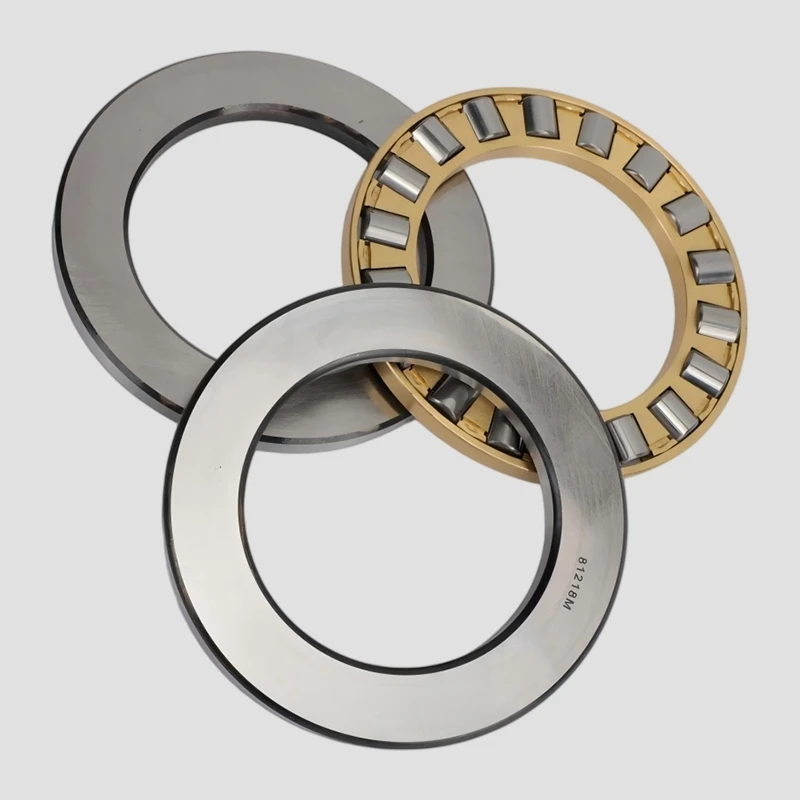
Now, let’s dive into where these things actually show up, because that’s the fun part. First up: the fruit and veg processing line. Ever wondered how those giant hydraulic presses squeeze juice from oranges without stopping? That’s thrust roller bearings doing the heavy lifting. Those presses apply hundreds of pounds of force to crush the fruit and extract liquid. If the bearings here weren’t built to handle that constant axial push, they’d wear out in days—leading to downtime that costs food processors thousands (if not millions) in lost production, plus wasted fruit that’s already prepped. But here’s the thing: food processing plants can’t use just any thrust bearing. They have to stand up to cleaning, right? Food-grade sanitation is non-negotiable—no leftover pulp, no bacteria clinging to crevices. That’s why a lot of the lines here use the Thrust Cylindrical Roller Bearing I supply; they have a simple, smooth design with fewer parts, so there’s nowhere for gunk to hide during washdowns. I actually worked with a citrus processor in Florida last year who was going through a new bearing every two weeks before switching to these. Now they go 6 months without a replacement. Wild, right?
Next, let’s talk about dairy and butter production. This is where thrust roller bearings really shine—especially in churning and pressing processes. Churning butter requires rotating large drums that apply consistent axial force to separate butterfat from buttermilk. If the bearings couldn’t handle that combined rotational and pushing load, the churn would slow down, leading to inconsistent butter texture, or even break mid-cycle. Wait, and then there’s the pressing step—after churning, you have to press out excess moisture from the butter to get that solid, spreadable consistency. Those butter presses use huge axial loads, and I’ve seen first-hand how a poorly matched bearing here can turn a $10k batch of butter into a ruined mess. Also, dairy plants are notoriously wet—constant exposure to water and cleaning chemicals means corrosion is a big risk. The thrust cylindrical bearings I mentioned earlier are coated in a food-safe anti-corrosive layer, so they don’t rust even when hosed down daily. That’s a game-changer for dairy ops that run 18 hours a day, 7 days a week.
Frozen food processing is another area you might not have considered. Think about frozen pizza or frozen dumpling production—those lines use high-speed forming machines that press dough and fillings into shape. The forming dies in these machines apply rapid, repeated axial force, and they need bearings that can keep up with that constant, intense push without failing. If a bearing lets go mid-run, you get mis-shaped pizza or dumplings that have to be thrown out, plus costly downtime to swap parts in a hot, loud factory. I had a conversation with a frozen food manufacturer in Wisconsin last quarter who was dealing with exactly that. Their old bearings were breaking every 3 months during the forming step, and after switching to the thrust cylindrical ones, they haven’t had a single breakdown in 9 months. The difference? These bearings are engineered for dynamic axial loads, not just static ones—so they handle that constant pulse of force from the forming dies way better.
Wait, we can’t skip meat and poultry processing either—this is a huge, underrated space for thrust roller bearings. The big stuff here is in cutting and portioning machines, and especially in the deboning lines. Wait, when you have a big carcass hanging, and you’re using a rotating blade to cut meat away from bone, there’s a lot of downward force on the blade assembly. The bearings holding that blade up have to handle that axial load all day, every day, without flexing or wearing. Also, hygiene is even stricter here because it’s raw meat—no room for bacteria breeding. The thrust bearings here are often made with food-grade stainless steel, which is non-reactive and easy to sanitize. I worked with a poultry processor in Georgia who told me before switching, their blade bearings would get contaminated during cleaning because of tiny gaps, leading to product recalls. The smooth design of the thrust cylindrical bearings eliminates those gaps, so they pass health inspections every time now. Recalls aren’t just costly—they ruin a brand’s reputation, so this stuff matters a lot.
Then there’s the underrated area: packaging and palletizing. Wait, most people think packaging is just labels and boxes, but when you’re packaging bulk food—like 50-pound bags of flour or rice, or cases of soda for distribution—you need palletizing robots or automated stacking machines. Those machines use lift mechanisms that apply huge axial force to stack heavy pallets, sometimes 10 feet high. If the bearings in the lift can’t handle that load, the pallet could collapse mid-stack, spilling thousands of pounds of product and damaging equipment. I actually supplied bearings to a grain processor in Iowa last year whose palletizing line was failing at least once a month because of undersized radial bearings. We swapped them for thrust roller bearings, and suddenly they can stack 12 pallets high without a single issue. Radial bearings just can’t handle that pure axial load—thrust bearings are built for exactly that.
Now, let’s talk about why these bearings are such a good fit for food processing specifically, beyond just load capacity. First, sanitation—most food-grade thrust bearings are either stainless steel or have food-safe coatings, so they don’t react with food or cleaning chemicals. They also have minimal lubrication needs, or use food-grade lubricants, so there’s no risk of grease getting into the product. That’s a huge deal; I’ve seen processors go bankrupt from a single incident of lubricant contaminating a batch of peanut butter. Second, reliability—food processing lines run non-stop, usually 24/7, 365 days a year (except maybe Christmas). Downtime is not an option. If a line stops, you have workers standing around, products going bad in hoppers, and contracts with retailers on the line. Thrust roller bearings are built for continuous, high-load operation, so they reduce that risk. Third, customization—every food processing line is different. A juice press has different load needs than a butter churn, so I work directly with processors to match the right thrust bearing—sometimes adjusting size, coating, or lubrication—so it fits their exact line. No one-size-fits-all here, and that’s why I love this work.

Wait, let’s get real for a second. I know a lot of food processors are wary of switching parts—they don’t want to mess with a line that’s already working. But here’s what I tell them: even if your current bearing works, it’s probably costing you more in downtime and replacements than switching to a better thrust roller bearing. Let’s do the math: if you spend $500 on a bearing every 2 weeks, that’s $13k a year. If you switch to a bearing that costs $2k but lasts 6 months, that’s $4k a year—way cheaper, plus no downtime. And when you add in the cost of wasted product or failed inspections, the savings are even bigger.
If you’re a food processing plant manager or maintenance supervisor reading this, you’re probably dealing with a headache right now: either your bearings are failing too often, they’re not standing up to cleaning, or you’re at risk of contamination. I get it—you have enough on your plate (pun totally intended) without dealing with broken parts. The good news is that thrust roller bearings are specifically designed to solve these exact problems.
If you want to talk through what’s going on with your line, or figure out which bearing is right for your operation, feel free to reach out. I’ve worked with everything from small family bakeries to large national food manufacturers, so I can help you find a solution that fits your needs and your budget. Don’t let tiny, simple parts like bearings derail your entire production—let’s talk.
References
- American Bearing Manufacturers Association. (2022). Food-Grade Bearing Applications in Industrial Processing. Retrieved from industry technical report archives.
- International Food Protection Training Institute. (2021). Sanitation Standards for Processing Equipment: Bearing Design and Hygiene. Federal Food Safety Guidelines.
- Machinery Lubrication Magazine. (2022). Thrust Roller Bearings: Load Capacity and Maintenance Best Practices for Continuous Production Lines. Industrial Maintenance Journal.
- Food and Agriculture Organization of the United Nations. (2020). Reducing Downtime in Food Processing: Equipment Reliability Case Studies. Global Food Industry Technical Brief.
- The National Food Association. (2023). Corrosion Resistance in Food Processing Equipment: Material and Coating Standards. Industry Safety and Maintenance Report.