

Hey everyone, it’s Jake from AB Bearings—y’know, the team that’s been supplying reliable rolling bearings for over two decades, including our Single Sealed Deep Groove Ball Bearing line. These bearings are workhorses for tons of applications: conveyor systems, food processing equipment, small electric motors, even lawn mower decks. They’re designed to keep contaminants out and lubrication in, but here’s the thing—no bearing is 100% reliable on its own. Over the years, we’ve seen customers throw perfectly good single sealed bearings at bad setups and wonder why they failed early. Today, I wanna walk through exactly what we do at our shop to ensure these bearings are rock-solid, plus share pro tips for installers and end-users to keep ’em running strong. Let’s dive in.
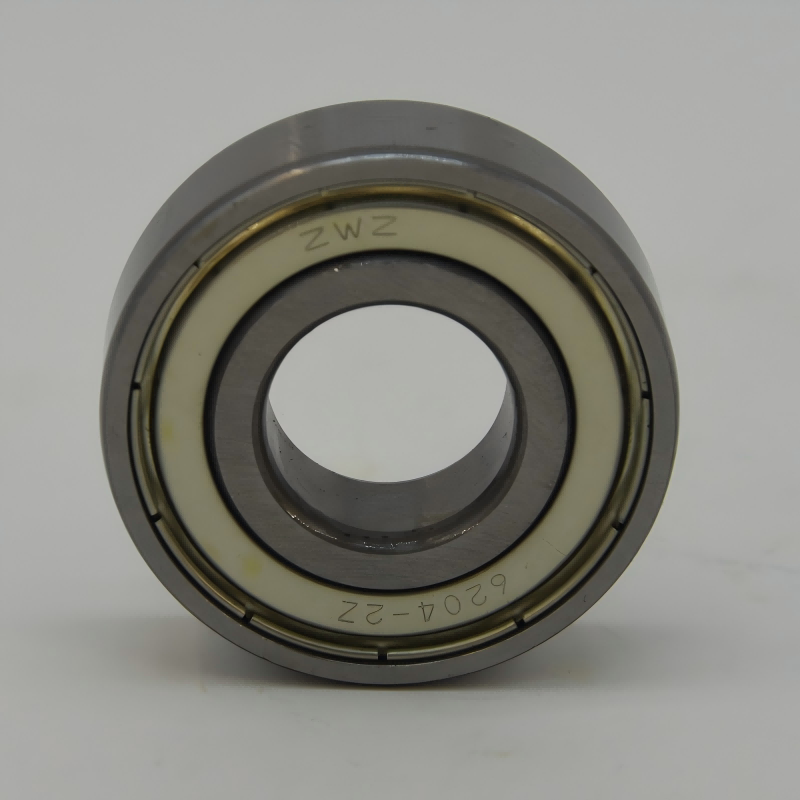
First, quick refresher for anyone new: single sealed deep groove ball bearings have one rubber or synthetic seal on one side, right? Unlike open bearings that get gunked up fast, or double sealed deep groove ball bearings which have two seals for extra protection, single sealed are the sweet spot for applications where you only need protection on one side (like a motor where the other side is open to air flow) or want lower friction than a double sealed unit. They’re also less expensive than double sealed, which makes ’em a go-to for cost-sensitive projects. But reliability starts way before the seal is even applied—it starts with the raw materials and manufacturing process.
Let’s talk materials first. We don’t cut corners here. Our single sealed deep groove ball bearings use high-chrome steel (usually 52100 grade) because it’s tough, wear-resistant, and holds up well under moderate loads. Some cheaper suppliers use lower-grade steel that can get pitted or crack under stress, but that’s a no-go for us. We also pay attention to the rolling elements—the balls themselves. We inspect every ball for surface flaws, size uniformity, and roundness. Even a tiny burr on a ball can cause vibration and premature failure. The raceways (the grooves in the inner and outer rings) get the same treatment; we use precision grinding to make sure they’re smooth and perfectly shaped. If the raceways aren’t ground to the right tolerances, the balls won’t roll evenly, which creates heat and wears out the bearing fast.
Next up, the seal itself—this is what makes a single sealed bearing single sealed, so it’s make-or-break for reliability. We use contact rubber seals (usually nitrile, Buna-N, or sometimes Viton for high temps) that fit tightly around the inner ring, creating a barrier against dust, dirt, moisture, and even chemicals. But the seal material and fit have to be balanced. If the seal is too tight, it creates extra friction, which generates heat and can shorten the bearing’s life. If it’s too loose, contaminants can sneak in. We test every seal to make sure it has the right amount of interference fit—enough to stay in place and block gunk, but not so much that it saps performance. We also make sure the seal is properly bonded to the outer ring; if it comes loose during assembly, it’s useless. Oh, and important: not all “sealed” bearings are created equal. Some suppliers use cheap plastic seals that crack easily, especially in cold temps or when exposed to oils. We only use seals rated for the application temps our bearings will see. For example, our standard nitrile seals work up to around 120°C, but if a customer needs something higher, we can spec Viton seals that go up to 200°C.
Lubrication is another big one that’s often overlooked. Most of our single sealed deep groove ball bearings come pre-lubricated with high-quality lithium-based grease, designed for long life and compatibility with the seal material. But we don’t just slop grease in there—we use the exact amount. Too much grease and it overflows, creates excess heat, and wastes lubricant. Too little and the balls and raceways rub together, causing wear. We calculate the exact grease volume based on the bearing size and application: for smaller bearings (like 6000 series), it’s around 30% of the internal space, while larger ones might be 40%. We also do a centrifugal stability test on the grease to make sure it doesn’t break down when the bearing is spinning at high speeds. If the grease separates, it can leave the balls unlubricated, leading to failure.
Wait, let’s not forget about dimensional accuracy. Single sealed deep groove ball bearings have tight tolerances for the inner and outer ring bores. If the bore is off by even a few microns, the bearing won’t seat properly in the housing or on the shaft, leading to misalignment. Misalignment is one of the top causes of bearing failure—when the shaft isn’t perfectly straight with the bearing, the balls load unevenly, causing edge wear on the raceways. We use CNC machining and coordinate measuring machines (CMMs) to check every bearing’s dimensions. We test run each bearing too—we spin them at different speeds for a set amount of time, check for vibration, noise, and temperature rise. If a bearing makes odd noises or runs hotter than our specs, we scrap it. No exceptions.
Now, even if we build the bearing perfectly, it’s only as reliable as how it’s handled and installed. That’s where our customers come in, and why we always include installation tips with every order. First, don’t hammer on the bearing—use a press. Hammering can damage the seal, bend the inner or outer ring, or crack the raceways. If you don’t have a press, use a sleeve that fits over the inner ring when pressing on the shaft, or the outer ring when pressing into the housing. That way, you don’t apply force through the balls. Also, clean the shaft and housing before installing—any dirt or debris in there will get inside the bearing and act like sandpaper. Oh, and for single sealed bearings, make sure the seal side is facing where you need the protection. If you put the seal on the wrong side, it’s not blocking anything, so contaminants can get in just like a Single Shielded Deep Groove Ball Bearing (which uses metal shields instead of rubber seals, so less friction but worse contamination protection). Shielded bearings are good for dry, low-dust environments, but sealed ones are for when you need that extra barrier.
Lubrication over time is another key point. Even pre-lubed bearings need top-ups, especially if they’re in continuous operation. But don’t over-lubricate—we see customers adding grease every month because they think it’s good, but too much grease is bad. Follow the manufacturer’s spec for re-lubrication intervals, based on speed, load, and environment. If your bearing is in a dirty place like a construction site, you’ll need to re-lube more often than one in a clean office. Also, use the right grease—don’t mix different types, because some greases aren’t compatible and can break down.
Let’s talk about common failure scenarios we see, and how to avoid them. A few months back, we had a customer who installed our single sealed deep groove ball bearings in a conveyor system at a sawmill. They failed in 3 months. Turned out, they used the bearings with the seal side facing the wrong way, so sawdust got in through the open side, and the seal on the other side didn’t do anything. That’s a simple fix—double-check which side is sealed. Another case: a lawn mower manufacturer used cheap bearings (not ours) for their blade spindles. The bearings failed because they used low-grade steel that rusted when exposed to grass clippings and moisture. Our single sealed bearings have better steel and a seal that blocks moisture, so that same mower would run for years.
Wait, let’s clarify the difference between single row and single sealed, because I know a lot of folks mix those up. A Single Row Deep Groove Ball Bearing just has one row of balls—they can be open, sealed, or shielded. The single sealed part is about the seal, not the number of rows. So if you need one row of balls with one seal, that’s our single sealed line. Double row is for higher loads, and double sealed (or double shielded deep groove ball bearing) is for when you need seals on both sides.
Another thing we do at AB Bearings is test under real-world conditions. We have a lab where we test our single sealed deep groove ball bearings in simulated environments: dusty, humid, high temp, low temp, heavy loads. We run them for thousands of hours to see when they start to wear. Last year, we tested a batch for a food processing customer (they need bearings that are food-safe too—we offer food-grade grease for those cases) and they held up 10x longer than the competitor’s bearings they’d been using. That’s the kind of reliability we stand behind.
What about storage? A lot of people forget that bearings can go bad before they’re even installed. If you store a single sealed deep groove ball bearing in a damp place, moisture can seep past the seal and rust the raceways. We recommend storing bearings in a cool, dry place, in their original packaging, and using them within 5 years of manufacture. Our packaging is moisture-resistant, so if you don’t open it, they’ll be good for a while, but once you open them, don’t leave them sitting around. Clean them with a light solvent if you have to, but make sure to re-lubricate before installation if you do.
Let’s wrap this up with a quick checklist for ensuring reliability:
- Pick a reputable supplier (like AB Bearings—we don’t cut corners on materials, seals, or testing)
- Choose the right bearing: single sealed for single-side contamination, double sealed if you need both sides protected, single shielded for low-dust environments
- Install correctly: use a press, clean the shaft/housing, align the seal side properly
- Lubricate correctly: use the right grease, don’t overdo it, follow re-lube intervals
- Store properly: cool, dry, original packaging, use within 5 years
- Monitor operation: watch for vibration, noise, or overheating—if you see it, check the bearing early.
If you’re looking for single sealed deep groove ball bearings, or want to chat about which bearing is right for your application, hit us up. Whether you’re a small workshop or a big manufacturing plant, we can help you find the right bearing to keep your equipment running strong, no unexpected downtime.
References:

- SKF Rolling Bearings: Design, Installation, and Maintenance Guidelines
- American Bearing Manufacturers Association (ABMA) Standard for Deep Groove Ball Bearings
- NTN Bearing Corporation: Sealed Bearing Performance and Testing Protocols
- Machinery Lubrication Magazine: Best Practices for Greasing Rolling Element Bearings