

Hey there! As a supplier of needle roller bearings, I've seen firsthand how speed can have a huge impact on their performance. In this blog, I'm gonna share with you what I've learned about how speed affects these little but mighty bearings.
First off, let's understand what needle roller bearings are. They're a type of roller bearing that use long, thin rollers (needles) to reduce friction between moving parts. They're super useful in applications where space is limited but high load - carrying capacity is needed, like in automotive transmissions, power tools, and industrial machinery.
How Speed Influences Friction
One of the most direct ways speed affects needle roller bearings is through friction. As the speed of the bearing increases, the friction between the rollers and the raceways also goes up. This is because at higher speeds, there's more contact and movement between the components.
Friction is a big deal because it generates heat. When the bearing runs at high speed, the heat produced can cause the lubricant to break down. Lubrication is crucial for needle roller bearings as it reduces friction and wear. If the lubricant breaks down, the friction will increase even more, leading to a vicious cycle. The increased heat can also cause the bearing materials to expand, which might change the internal clearances of the bearing. If these clearances are altered too much, it can lead to premature wear and even bearing failure.
Impact on Wear and Fatigue
Speed also has a significant impact on wear and fatigue. At higher speeds, the rollers are subjected to more stress and more frequent loading cycles. This can lead to surface wear on the rollers and the raceways. Wear can cause the bearing to lose its precision, which means it won't perform as well as it should.
Fatigue is another issue. The repeated stress from high - speed operation can cause tiny cracks to form on the bearing surfaces. Over time, these cracks can grow and eventually lead to spalling, where pieces of the bearing material break off. This not only reduces the bearing's lifespan but also can cause other problems in the machinery it's part of.
Centrifugal Force and Cage Integrity
Centrifugal force is yet another factor affected by speed. As the bearing spins faster, the centrifugal force acting on the rollers and the cage increases. The cage is responsible for keeping the rollers evenly spaced and guiding their movement. At high speeds, the increased centrifugal force can put a lot of stress on the cage.
If the cage isn't designed to handle the high - speed centrifugal forces, it can deform or break. A damaged cage can cause the rollers to become misaligned, which will lead to uneven loading and increased wear. So, when dealing with high - speed applications, it's crucial to choose a bearing with a cage that can withstand the centrifugal forces.
Lubrication Requirements at Different Speeds
Lubrication is key for needle roller bearings, and the speed of the bearing determines the type and amount of lubrication needed. At lower speeds, a simple grease lubrication might be enough. Grease is easy to apply and can provide good protection against wear and corrosion.
However, as the speed increases, the lubrication requirements become more demanding. High - speed bearings often require oil lubrication. Oil can better dissipate heat and provide a more consistent lubricating film between the rollers and the raceways. The viscosity of the oil also matters. For high - speed applications, a lower - viscosity oil is usually preferred as it can flow more easily and reduce friction.

Selecting the Right Bearing for High - Speed Applications
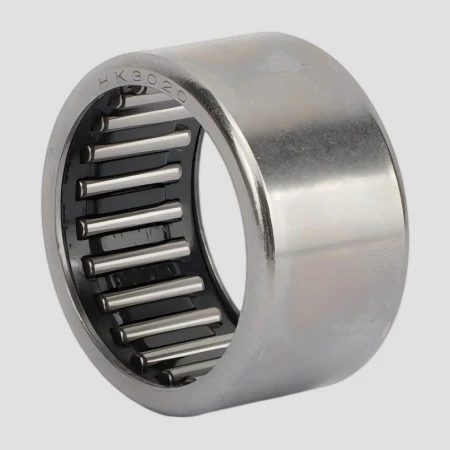
If you're in an application that requires high - speed operation, choosing the right needle roller bearing is crucial. There are two main types: Needle Roller Bearing with Inner Ring and Needle Roller Bearing without Inner Ring.
For high - speed applications, a bearing with an inner ring might be a better choice. The inner ring provides a more stable surface for the rollers to roll on, which can help reduce vibration and improve the overall performance at high speeds. However, if space is extremely limited, a bearing without an inner ring can be used, but extra care needs to be taken to ensure proper lubrication and alignment.
Cooling and Heat Dissipation
To deal with the heat generated at high speeds, proper cooling and heat dissipation are essential. In some applications, external cooling systems like fans or liquid - cooling can be used. These systems help to keep the bearing temperature within an acceptable range, which can prevent lubricant breakdown and material expansion.
Some needle roller bearings are also designed with features that enhance heat dissipation. For example, some bearings have special grooves or channels in the raceways that allow the lubricant to flow more effectively and carry away heat.
Monitoring and Maintenance
When using needle roller bearings at high speeds, regular monitoring and maintenance are a must. You can use sensors to monitor the temperature, vibration, and other parameters of the bearing. If the temperature starts to rise or the vibration levels increase, it could be a sign of a problem.
Maintenance includes checking the lubrication levels, inspecting the bearing for wear and damage, and ensuring proper alignment. By catching problems early, you can prevent costly breakdowns and extend the lifespan of the bearing.
Conclusion
In conclusion, speed has a profound impact on the performance of needle roller bearings. From increasing friction and wear to affecting the cage integrity and lubrication requirements, every aspect of the bearing's operation is influenced by speed.
As a needle roller bearing supplier, I can help you choose the right bearing for your specific application, whether it's a low - speed or high - speed one. If you're in the market for needle roller bearings, or if you have any questions about how speed might affect your bearing performance, don't hesitate to reach out. We're here to assist you in getting the best - performing bearings for your machinery. Let's have a chat and see how we can meet your bearing needs!
References
- Harris, T. A., & Kotzalas, M. N. (2007). Rolling Bearing Analysis. Wiley.
- Schmitt, R. (2010). Rolling Bearings: Design, Application, Maintenance. Elsevier.